
Vietnamese Verb Tenses: đã, đang, sẽ Explained
Vietnamese verbs never conjugate. Past, present, and future come from three little markers: đã, đang, and sẽ. Learn how and when to use them.
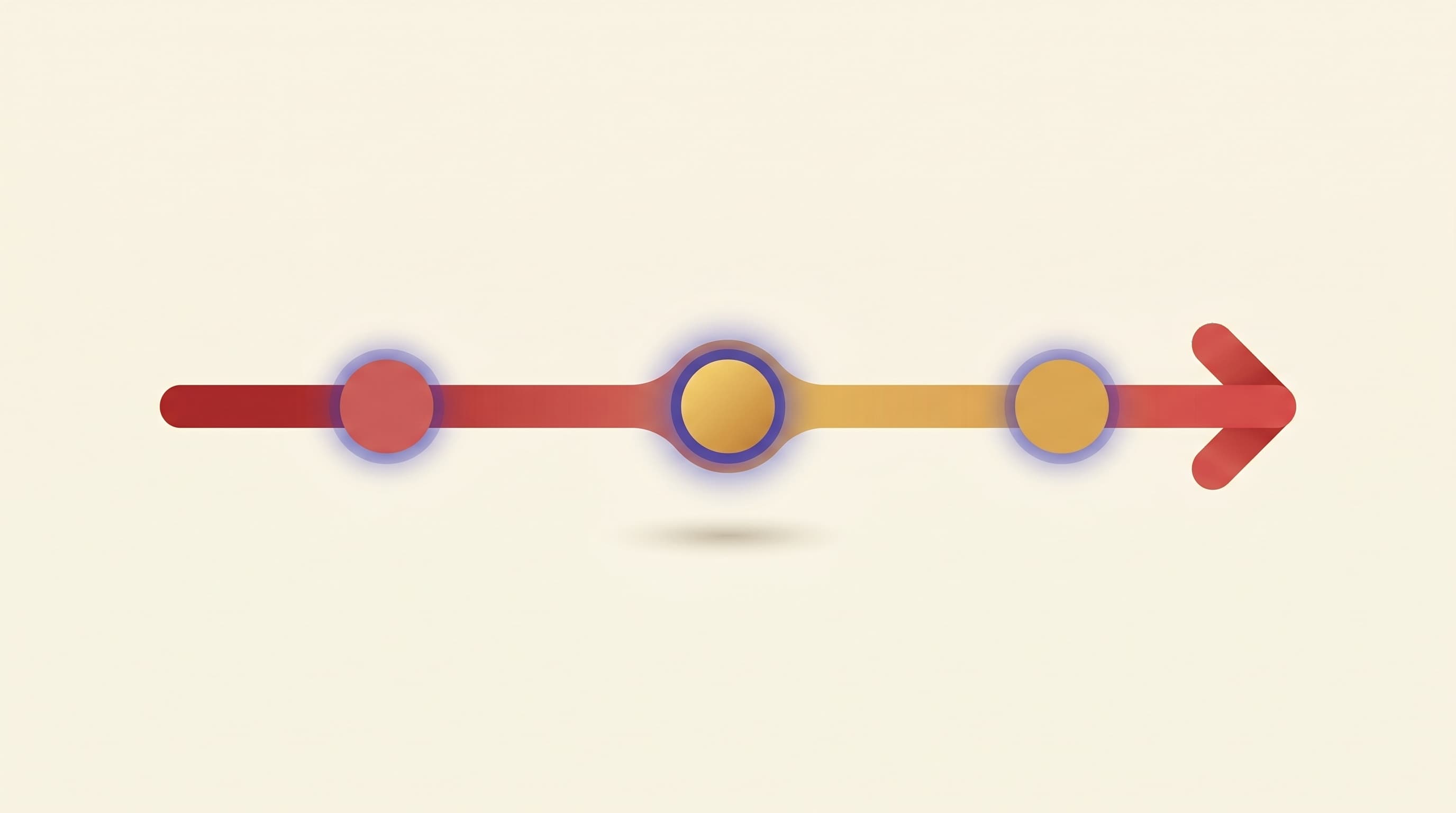
Good news: Vietnamese verb tenses barely exist. Verbs never conjugate. To show time, you add one small marker before the verb: đã for the past, đang for something happening right now, and sẽ for the future. So tôi ăn (I eat) becomes tôi đã ăn (I ate), tôi đang ăn (I am eating), or tôi sẽ ăn (I will eat). That is the whole system.
Vietnamese verb tenses work on one refreshing idea: the verb itself never changes. If conjugation tables scared you in other languages, relax. Vietnamese has none, which is a big reason Vietnamese grammar is easier than people expect. The verb stays the same for I, you, he, she, and they, in every tense. You can practice the three markers below free, no login.
The three markers
Each marker sits directly before the verb:
| Marker | Time | Example |
|---|---|---|
| đã | past (did, already) | Tôi đã ăn. (I ate / I have eaten.) |
| đang | happening now (-ing) | Tôi đang ăn. (I am eating.) |
| sẽ | future (will) | Tôi sẽ ăn. (I will eat.) |
The verb ăn (eat) never changes. Swap the marker and you swap the tense. That is it.
You can often drop the marker
Here is the part that makes Vietnamese feel light. If a time word already tells you when, the marker is usually dropped:
- Hôm qua tôi ăn phở. (Yesterday I ate phở.) The word hôm qua (yesterday) already signals past, so đã is optional.
- Ngày mai tôi đi Huế. (Tomorrow I go to Hue.) Ngày mai (tomorrow) signals the future on its own.
Use the marker when the timing is not obvious, and lean on time words otherwise. Learning a few of those (from days, months, and time) makes this effortless.
A few useful extras
Beyond the core three, a few more markers come up constantly:
- sắp means "about to": Tôi sắp đi. (I am about to leave.) Trời sắp mưa. (It is about to rain.)
- vừa or mới means "just (did)": Tôi vừa ăn. (I just ate.) Cô ấy mới về. (She just got back.)
You will also hear rồi at the end of a sentence to stress that something is done: Tôi ăn rồi. (I have already eaten.) It often teams up with đã: Tôi đã làm xong rồi. (I have already finished.)
Not yet: chưa
The natural partner of đã is chưa, which means "not yet." Use it before the verb to say something has not happened:
- Tôi chưa ăn. (I have not eaten yet.)
- Cô ấy chưa về. (She has not come home yet.)
To ask "have you ... yet?", just end the sentence with chưa?:
- Bạn ăn chưa? (Have you eaten yet?)
- Bạn làm xong chưa? (Have you finished yet?)
In fact Bạn ăn chưa? is a warm, everyday greeting in Vietnam, a bit like "how's it going." You answer Rồi (yes, already) or Chưa (not yet). That one little pair, rồi and chưa, handles a huge share of daily back-and-forth.
Asking about time
To ask "when," pair these markers with the question words from Vietnamese question words: Khi nào bạn đi? asks about the future, while Bạn đi khi nào? asks about the past. The marker and the question word work as a team.
Let time words carry the tense
Because the markers are optional, a small set of time words does most of the heavy lifting. Learn these and you can often skip đã, đang, and sẽ entirely:
| Vietnamese | English |
|---|---|
| hôm qua | yesterday |
| hôm nay | today |
| ngày mai | tomorrow |
| bây giờ | now |
| tuần sau | next week |
| năm ngoái | last year |
With one of these at the front, the time is already clear: Năm ngoái tôi đến Việt Nam. (Last year I came to Vietnam.) No marker needed. Reach for đã/đang/sẽ only when the timing would otherwise be ambiguous.
Put it together
- Bây giờ tôi đang học tiếng Việt. (Right now I am studying Vietnamese.)
- Tuần sau chúng tôi sẽ gặp nhau. (Next week we will meet.)
- Cô ấy đã về nhà rồi. (She has already gone home.)
See them work together
A quick exchange shows how naturally the markers slot in:
- Bạn đang làm gì? (What are you doing?)
- Tôi đang nấu ăn. Tôi sắp xong. (I am cooking. I am almost done.)
- Bạn ăn chưa? (Have you eaten yet?)
- Chưa. Tôi sẽ ăn sau. (Not yet. I will eat later.)
Four short lines, and you have already used đang, sắp, chưa, and sẽ the way a native speaker would.
Common beginner mistakes
- Putting the marker after the verb. It goes before: tôi đã ăn, not "tôi ăn đã."
- Adding a marker to every sentence. If a time word is present, drop it: say Hôm qua tôi đi, not "Hôm qua tôi đã đi" (stacking both sounds heavy).
- Hunting for verb endings. There are none. The verb stays plain: ăn is always ăn, whether it is đã ăn, đang ăn, or sẽ ăn.
Once the three markers click, you can place any sentence in time. Combine them with comparatives and the patterns in Vietnamese sentence structure, and your sentences start to sound natural fast. For the full path, see the beginner roadmap.
Sources
- Vietnamese tense and aspect. Linguistic reference for the preverbal markers đã (past), đang (progressive), sẽ (future), the optional dropping of markers with time adverbials, and sắp / vừa / mới / rồi.
Interactive lessons with listening, typing and speaking exercises. Free, no account.
Common questions
Verbs never change form. You show time with a small marker before the verb: 'đã' for past, 'đang' for an action happening now, and 'sẽ' for the future. 'Tôi ăn' (I eat) becomes 'Tôi đã ăn' (I ate).
'đã' marks the past (already, did), 'đang' marks an action in progress (-ing, right now), and 'sẽ' marks the future (will). Each goes directly before the verb.
No. If a time word like 'hôm qua' (yesterday) or 'ngày mai' (tomorrow) already makes the time clear, Vietnamese usually drops the marker. They are optional helpers, not required endings.
There is no conjugation at all. The verb stays the same for every subject and every tense, which makes Vietnamese far simpler than European languages here.
Still stuck on this?
Send Ngân Trần your question about this post and she will answer it herself.