
Vietnamese Family Words & Pronouns (Why They're the Same Thing)
In Vietnamese, family words ARE the pronouns. Learn mom, dad, older/younger siblings, and how the same words mean "you" and "I" in conversation.
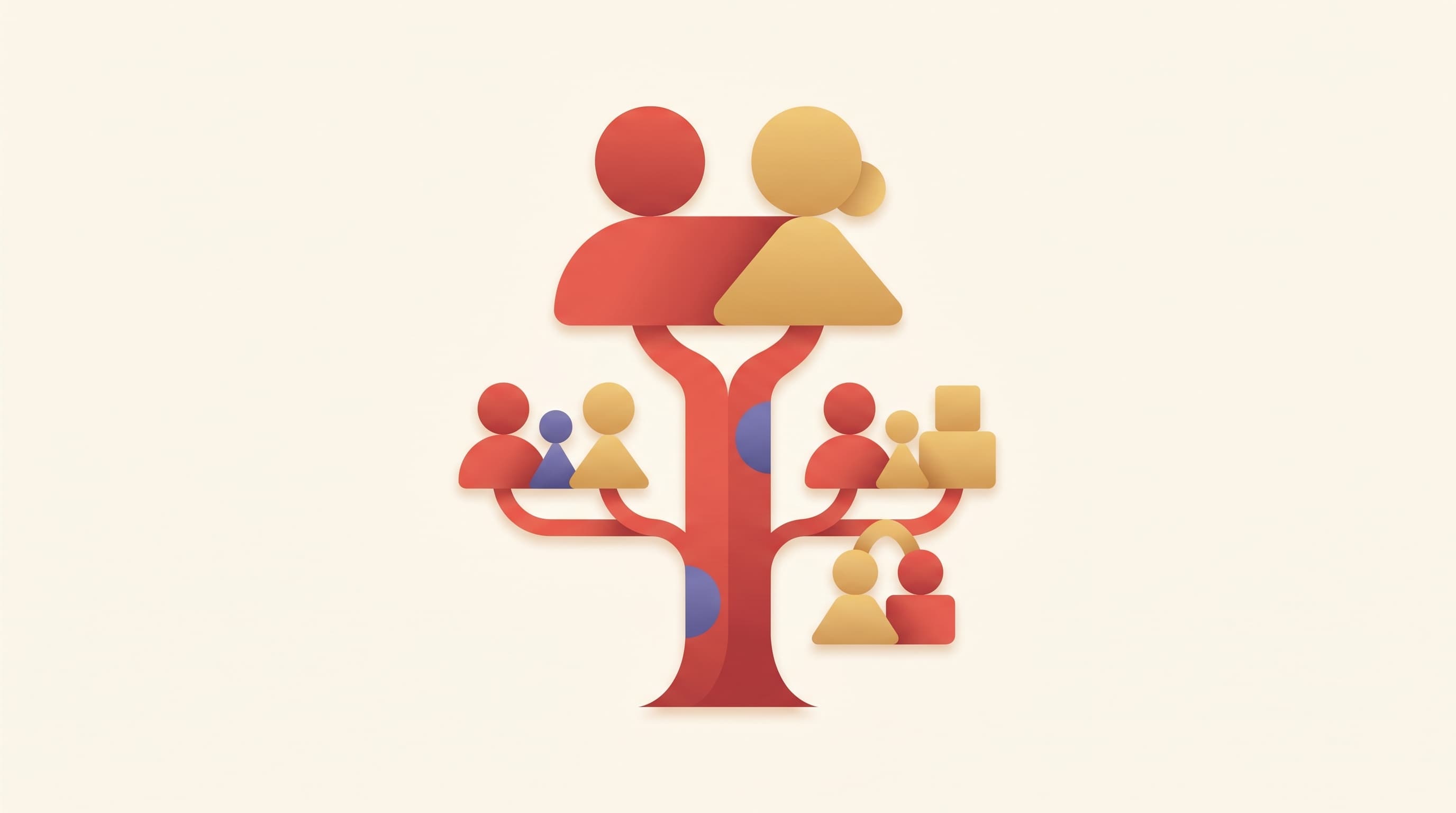
Core family words: mẹ (mom), bố/ba (dad), anh (older brother), chị (older sister), em (younger sibling), ông/bà (grandpa/grandma). Crucially, these same words double as pronouns, you address people by their family role, not a neutral "you."
Family vocabulary is unusually important in Vietnamese, because the words for relatives are also the words for "you" and "I." Learn them once and you unlock the whole system of address.
Core family words
| Relation | Vietnamese | Pronunciation |
|---|---|---|
| mother | mẹ / má | meh / mah |
| father | bố / ba | boh / bah |
| older brother | anh | anh |
| older sister | chị | chee |
| younger sibling | em | em |
| grandfather | ông | ohng |
| grandmother | bà | bah |
Why family words = pronouns
This is the key idea. Vietnamese has no all-purpose "you." Instead, you address people using the family term that fits their age and gender relative to you, even strangers:
- Talking to an older man? Call him anh ("older brother").
- Talking to an older woman? chị ("older sister").
- Talking to a child or someone younger? em.
- Referring to yourself to that person? You use the complementary term.
So the same word is "you," "he/she," and a family role, depending on context. This runs through Vietnamese greetings and sentence structure, and it pairs with the question words you use to ask who someone is.
Age & gender matter
Because address depends on relative age, Vietnamese speakers often ask your age early, it's not rude, it's how they know which pronoun to use. When in doubt, err toward the more respectful (older) term.
North vs South vocabulary
A few family words differ by region:
| Meaning | North | South |
|---|---|---|
| mom | mẹ | má |
| dad | bố | ba |
More regional differences in Northern vs Southern Vietnamese.
Extended family
| Relation | Vietnamese |
|---|---|
| aunt (dad's younger sister) | cô |
| uncle (dad's younger brother) | chú |
| aunt (mom's side) | dì |
| uncle/aunt (parent's older sibling) | bác |
| uncle (mom's brother) | cậu |
| child | con |
| grandchild / niece / nephew | cháu |
One fun overlap: con means "child" here, but it is also the classifier for animals, the same small word doing two everyday jobs.
Sources
- Vietnamese kinship terms and pronouns verified against standard references (Wiktionary): mẹ/má, bố/ba, anh/chị/em, ông/bà, and the extended set (cô, chú, dì, bác, cậu, con, cháu).
Interactive lessons with listening, typing and speaking exercises. Free, no account.
Common questions
mẹ (mom), bố or ba (dad), anh (older brother), chị (older sister), em (younger sibling), ông (grandfather), bà (grandmother). These same words double as pronouns in conversation.
Vietnamese addresses people by their family role relative to you instead of a neutral 'you.' So you call an older man 'anh' (older brother) whether or not he's related, and refer to yourself as 'em' if you're younger.
anh is an older male, chị is an older female, and em is a younger person of either gender. You choose based on the other person's age relative to yours.
Both mean 'dad.' Bố is more common in the North and ba in the South. Similarly, mẹ (North) and má (South) both mean 'mom.'
Still stuck on this?
Send Ngân Trần your question about this post and she will answer it herself.