
Vietnamese Classifiers: cái, con, người Explained
Vietnamese classifiers are little counting words like cái, con, and người that sit between a number and a noun. Learn the rule and the common ones.
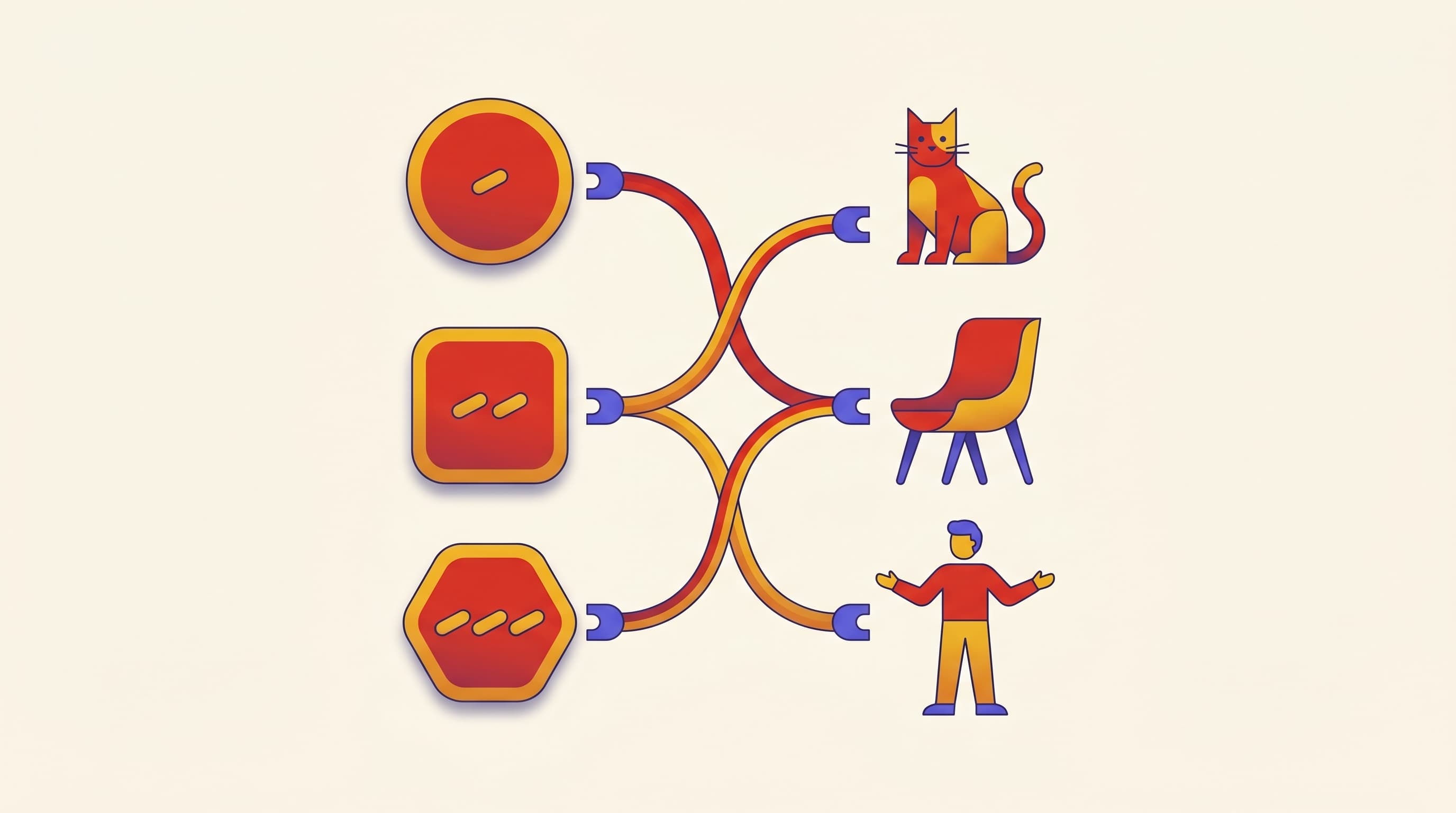
Vietnamese classifiers are little counting words that sit between a number and a noun. The three you meet first are cái (objects), con (animals), and người (people). So three cats is ba con mèo (three + con + cat), and two tables is hai cái bàn. Once you know the pattern, you can count almost anything.
If you have started counting things in Vietnamese, you have probably hit the wall that surprises every beginner: you cannot just say "three cats." You need a small word in the middle. These words are called classifiers, and they are one of the first real differences from English. The good news is the pattern is simple and you can practice it free, no login, in a couple of minutes.
The rule: number + classifier + noun
Almost every time you count, the order is the same:
number + classifier + noun
- ba con mèo (three cats): ba (three) + con (classifier) + mèo (cat)
- hai cái bàn (two tables): hai (two) + cái + bàn (table)
- bốn người bạn (four friends): bốn (four) + người + bạn (friend)
The classifier never changes for plural. There are no plural endings in Vietnamese, so the number does that job. If counting itself is still new, review numbers in Vietnamese first, then come back.
The big three: cái, con, người
Start with these and you can handle most everyday situations.
| Classifier | Used for | Example |
|---|---|---|
| cái | objects and things | cái bàn (table), cái ghế (chair), cái điện thoại (phone) |
| con | animals | con chó (dog), con mèo (cat), con cá (fish) |
| người | people | người bạn (friend), ba người (three people) |
cái is the general workhorse. When you are not sure which classifier an object takes, cái is the safe default and people will understand you.
con is not only for animals
Here is the twist that trips people up. con is the animal classifier, but it also attaches to a handful of things that move, flow, or feel alive to Vietnamese speakers:
- con dao (knife)
- con sông (river)
- con đường (road)
- con mắt (eye)
Vietnamese tends to reach for con when it pictures something as moving or alive, which is why a flowing river and a road that carries you somewhere both take it. You do not need to memorize a long list. Just know that if a noun surprises you with con, it is usually one of these "lively" cases, not a mistake.
More classifiers you will meet
As you read and listen more, these come up often:
| Classifier | Used for | Example |
|---|---|---|
| quả (or trái in the south) | fruit and round things | quả táo (apple), quả bóng (ball) |
| chiếc | vehicles and single items | chiếc xe (a vehicle), chiếc giày (one shoe) |
| cuốn (or quyển) | books | cuốn sách (book) |
| tờ | flat sheets | tờ giấy (sheet of paper), tờ báo (newspaper) |
| bức | framed flat things | bức tranh (painting), bức ảnh (photo) |
Notice chiếc and cái can both count objects. chiếc leans toward a single, individual item (one of a pair, or a vehicle), while cái is the everyday general choice.
Northern and southern differences
A few classifiers shift by region, the same north and south split you see in Northern vs Southern Vietnamese:
- Fruit: the north favors quả (quả cam = orange), the south favors trái (trái cam). Both are correct and understood everywhere.
- Books: you will hear quyển more in the north and cuốn more in the south, but either one works for a book.
You do not have to pick a side. Use whichever you learned first and people will follow you fine.
Saying this and that
Classifiers also help you point at one specific thing. The pattern flips to the end:
classifier + noun + này (this) / đó or kia (that)
- con mèo này (this cat)
- cái bàn đó (that table)
- quả táo kia (that apple over there)
This is the same building block you use across Vietnamese sentence structure, so it pays off quickly.
Put it together
Here are the second-table classifiers in real phrases, all following number + classifier + noun:
- một quả chuối (one banana)
- hai chiếc xe máy (two motorbikes)
- ba cuốn sách (three books)
- bốn tờ giấy (four sheets of paper)
- năm bức ảnh (five photos)
Read each one aloud once. The classifier is the little word in the middle, and after a few rounds it stops feeling like an extra step.
When you can skip the classifier
You do not always need one. Drop it when you talk about something in general rather than counting specific items:
- Tôi thích cà phê. (I like coffee.) No classifier, because you mean coffee in general.
- Cho tôi hai cái bánh. (Give me two cakes.) Classifier needed, because you are counting.
A simple test: if there is a number or a "this/that," you almost certainly need a classifier.
Common beginner mistakes
- Using cái for animals. Say con chó, not "cái chó."
- Forgetting the classifier after a number. It is ba con mèo, not "ba mèo."
- Worrying too much. If you blank on the right one, use cái for objects and con for animals and keep going. This is exactly the kind of thing that sticks fast with a little daily practice, and it is far less scary than the tones people fear.
Classifiers feel strange for about a week, then they become automatic. The fastest way there is to match them to real nouns until the pairings feel obvious.
You can also fold classifiers into everyday lines from the basic Vietnamese phrases guide, and notice how người doubles as a family and pronoun word.
Sources
- Vietnamese classifiers (loại từ). Linguistic reference for the number + classifier + noun pattern, the roles of cái, con, and người, and the demonstrative order classifier + noun + này/đó.
Interactive lessons with listening, typing and speaking exercises. Free, no account.
Common questions
Classifiers are small counting words placed between a number and a noun, like 'con' for animals and 'cái' for objects. 'Ba con mèo' means 'three cats' (three + classifier + cat).
Use 'con' for animals and most living or moving things (con chó = dog), and 'cái' for ordinary objects (cái bàn = table). When unsure about an object, 'cái' is the safest general choice.
Not always. You need one when you count or point to a specific item (hai cái ghế = two chairs). You can skip it when you speak generally, like 'Tôi thích cà phê' (I like coffee).
Put the classifier before the noun and 'này' (this) or 'đó' / 'kia' (that) after it: 'con mèo này' (this cat), 'cái bàn đó' (that table).
Still stuck on this?
Send Ngân Trần your question about this post and she will answer it herself.